
H-1B Visa 2026 Changes: What F-1 Students and Early-Career Professionals Need to Know
Details on H-1B Visa 2026 (2025) Changes – What F-1 Students, Graduates, and Early-Career Professionals Should Know
Changes in H-1B visa landscape have transpired very quickly and international students are worried about what these updates mean for them moving forward as far as a future in the USA. With many of you set to adjust status from F-1 to H-1B, learning about the H-1B visa 2026 changes is crucial.
On the plus side, while the process is getting more competitive, you can develop a better strategy with an understanding of new rules. What we will do in [this guide] In this comprehensive guide, we cover the overview changes as well as detail how these changes impact international graduates and early-career professionals, and what actions you can take immediately to increase your chances of success.
Why the H-1B Visa Matters
The H-1B is an employer-sponsored visa that enables U.S.-based employers to employ foreign workers in specialized occupations that require at least a bachelor’s degree or equivalent related work experience.
The path is usually like this for most of the international students:
- Complete a U.S. degree.
- Employment under Optional Practical Training (OPT)
- STEM OPT application in case you apply for it.
- Enter the H-1B selection process.
- Career Change to Temporary Work, with a Chance of being Permanent Resident
As demand usually outstrips the yearly quota, modifications to the selection procedure can have a huge effect on candidates.
Summary of Major H-1B Visa 2026 Changes and Updates
Multiple key changes are altering the program in 2026:
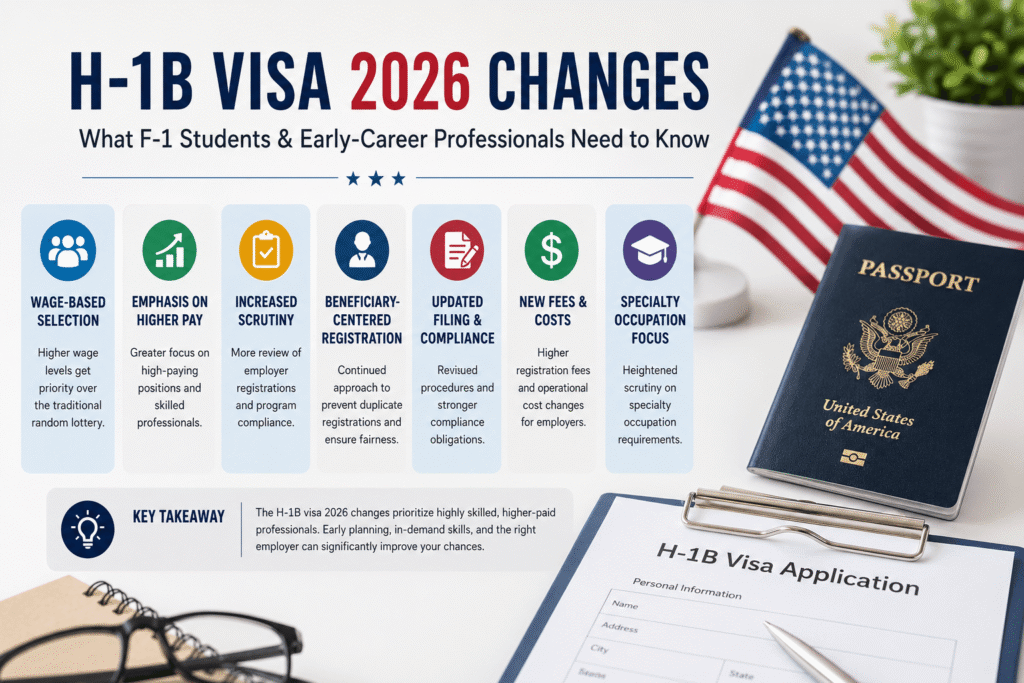
Key Updates at a Glance
- Replacing the traditional random lottery with wage-based selection
- Greater emphasis on higher-paying positions
- Increased scrutiny of employer registrations
- Continued use of beneficiary-centered registration
- Revised filing procedures and compliance obligations
- New registration fees and changes associated with the operational process
- Heightened scrutiny of specialty occupation criteria
Combined, these changes represent a move towards prioritising highly skilled often very well transferred professionals.
H-1B Visa 2026 changes and updates: What the New Wage-Based Selection Rules Mean
The biggest change is the shift from a completely random lottery based system.
In the past, when USCIS received more registrations than there were available visa slots, selections were made randomly. In the new framework, the preference with higher wage levels ranks higher in the selection process. This wage-weighted method was ended by DHS for the FY 2027 H-1B cap season that commenced in 2026.
How Wage-Based Selection Works
The system generally prioritizes:
- Level IV prevailing wage positions
- Level III positions
- Level II positions
- Level I positions
This is because applicants are more likely to be chosen if they ask for a higher salary than those who request an entry-level wage.
So what Does This Mean for F-1 Students
Recent graduates, as many of us are aware, often enter Wage Level I or II.
In a wage-prioritized system, they may have even more problems than experienced professionals trying to get candidates with limited experience on their resume.
For example:
Candidate A
- Master’s degree in Computer Science
- Salary offer: $150,000
- Wage Level III
Candidate B
- Recent graduate
- Salary offer: $80,000
- Wage Level I
This means under the new system, it is possible that Candidate A would have a likelihood of being selected several times larger than candidate B.
This however does not mean that entry-level applicants can get rejected. What it means in simple terms is that salary levels now matter more than ever before.
What these new rules mean for international students
H-1B Visa 2026 Changes Affect Many, Most Impacted are International Students
Increased Importance of STEM Degrees
Advantages for students in the most high-demand fields among colleges include:
- Artificial Intelligence
- Machine Learning
- Data Science
- Cybersecurity
- Software Engineering
- Cloud Computing
- Biotechnology
Well-paid fields tend to have high prevailing wage levels that employers hiring in those areas must compete against.
Stronger Focus on Career Planning
In fact, students should start H-1B planning well before graduation.
Recommended timeline:
12–18 Months Before Graduation
- Research H-1B sponsoring employers
- Build internship experience
- Develop specialized skills
6–12 Months Before Graduation
- Begin full-time job search
- Understand prevailing wage requirements
- Discuss sponsorship policies with recruiters
After Employment
- Work closely with your employer’s immigration team
- Maintain accurate records
- Monitor registration deadlines
Registration and Filing Updates
We continue to see electronic registration system as a key part of the H-1B process.
Registration Window
When the USCIS registration period is open, employers will need to file registrations and pay the registration fee. USCIS still employs an online registration process prior to permitting specific employers to submit complete H-1B petitions.
Beneficiary-Centered Selection
USCIS continues using beneficiary-centered registration.
Its purpose was to limit duplicate registrations and remove advantages it gave.
Benefits include:
- Greater integrity in the process
- Reduced abuse
- Fairer treatment of applicants
For students, this means getting more than one registration using multiple employers is no longer of any benefit.
Higher Scrutiny on Specialty Occupations
Suggested Read: Another Major Trend is filing and scrutiny of specialty occupation.
Employers must clearly demonstrate that:
- The position requires specialized knowledge.
- You must have a specific degree field.
- This worker has the qualifications
Common Problem Areas
USCIS may examine:
- Generic job descriptions
- Broad degree requirements
- Inconsistent job duties
- Entry-level positions lacking specialized responsibilities
It becomes mandatory for applicants to select the positions that match their academics, and hence this process.
Filing Fees and Cost Considerations
Employers should anticipate that compliance and administrative costs are likely to continue rising.
Current expenses may include:
- Registration fees
- Form filing fees
- Fraud prevention fees
- Attorney fees
- Premium processing fees (if used)
In addition, the most recent of these policy debates included discussions regarding much higher H-1B $ fees, but legal disputes have continued to delay implementation.
Why Costs Matter
Employers usually do the following when sponsorship becomes more expensive:
- Hire more selectively
- Focus on high-impact roles
- Prioritize candidates with specialized skills
That makes it important for applicants to show that their idea has clear business value.
Real-World Example: Two Different Outcomes
Consider two international graduates.
Student 1: Strategic Preparation
- Master’s degree in Data Science
- Multiple internships
- ❳ Khuẩn 029 — Job offer from a big tech company
- Compensate at levels above prevailing wages Level III
Result:
The entrenched position under the wage-dominant system.
Student 2: Minimal Planning
- Bachelor’s degree
- Limited internship experience
- Entry-level role with lower compensation
- Employer unfamiliar with sponsorship
Result:
Decreased competitiveness under the new framework.
It is neither technical skill nor talent that makes the difference — but rather preparatory work and positioning.
H-1B Strategies to do Better in 2026
Focus on High-Demand Skills
Specialized skills is a premium service that seems to command higher pay across the board.
Areas worth developing include:
- Artificial Intelligence
- Cloud Architecture
- Cybersecurity
- Data Engineering
- Machine Learning
- DevOps
- Enterprise Software Development
Earn Advanced Degrees
Here is how a U.S. master’s degree will help you:
- Higher salary potential
- Increased employer interest
- More potential in the outlay of applicants with advanced degrees
Target H-1B-Friendly Employers
Identify research institutes that already have a sponsorship program.
Look for:
- Technology companies
- Engineering firms
- Healthcare organizations
- Research institutions
- Financial services companies
- Build Internship Experience
The fact is employers want to hire someone who can start working right away.
Internships help demonstrate:
- Technical competence
- Communication skills
- Industry knowledge
- Workplace readiness
Official Sources You Should Follow
Immigration policies evolve frequently.
Always confirm with credible sources, such as;
- U.S. Citizenship and Immigration Services (USCIS)
- U.S. Department of Homeland Security (DHS)
- U.S. Department of Labor (DOL)
Do not rely alone on social media rumors or unofficial forums.
Good immigration lawyers can also give advice on a case-by-case basis.
Common Mistakes to Avoid
Waiting Too Long
Many students start preparing just a few months prior to graduation.
Early planning creates more opportunities.
Ignoring Prevailing Wage Levels
More attention needs to be paid to Salary.
Understand how wage levels impact your competitiveness.
Choosing Employers Without Sponsorship Experience
This causes avoidable delays or mistakes for employers who are not familiar with H-1B procedures.
Overlooking Alternative Visa Options
Alternatives may include, for example, depending on your situation:
- O-1 Visa
- TN Visa
- E-3 Visa
- L-1 Visa
A skilled immigration attorney can help identify the available options.
The Future of H-1B Law and Practice
The bottom line is crystal clear: US immigration authorities are focusing on skill level, specialization, and wage levels.
The ancient lottery system is being gradually displaced by a model that rewards:
- Advanced expertise
- Higher wages
- Strong employer sponsorship
- Demonstrated economic value
Success will depend less on luck and more on purposeful career planning, especially for international students and early-career professionals.
Frequently Asked Questions
Here are the major H-1B visa 2026 changes.
The most salient is the shift to a wage-based system of choosing which workers are eligible for selection, as opposed to a strictly random lottery.
With the latest changes to H-1B, does it impact F-1 Students adversely?
Not totally, but entry-level workers could see more experienced professionals buy a greater share of the pie in a broader range of work just because they get paid more.
Quick Question: Is H-1B Lottery No More?
The changelog of the old random-select model. Going forward, however, wage levels are more likely to influence selection results.
This puts the question, can STEM OPT improve my H-1B chances?
Yes. STEM OPT is an extension of your work authorization to provide you additional time when you can register for future H-1B cycles.
I still need an immigration lawyer, right?
Professional legal help can be beneficial in complex cases, employer-specific questions, and long-term immigration planning.
Final Thoughts
Among the most significant changes to the program in recent history are some of the H-1B visa 201906636629 mandates passed. Some such new rules may add to the woes of freshers but reward thorough preparation, domain expertise and career mapping.
Get your prep done now if you are an F-1 student or an early career professional. Acquire All this information is published on USCIS updates Official announcements (law changes), develop good skills, target compatible employers and wage levels. If you recognize the H-1B plan early enough, great!
Ready to supercharge on your H1B success? Subscribe for our immigration updates newsletterso you never miss a single USCIS policy change, deadline and visa opportunity.