
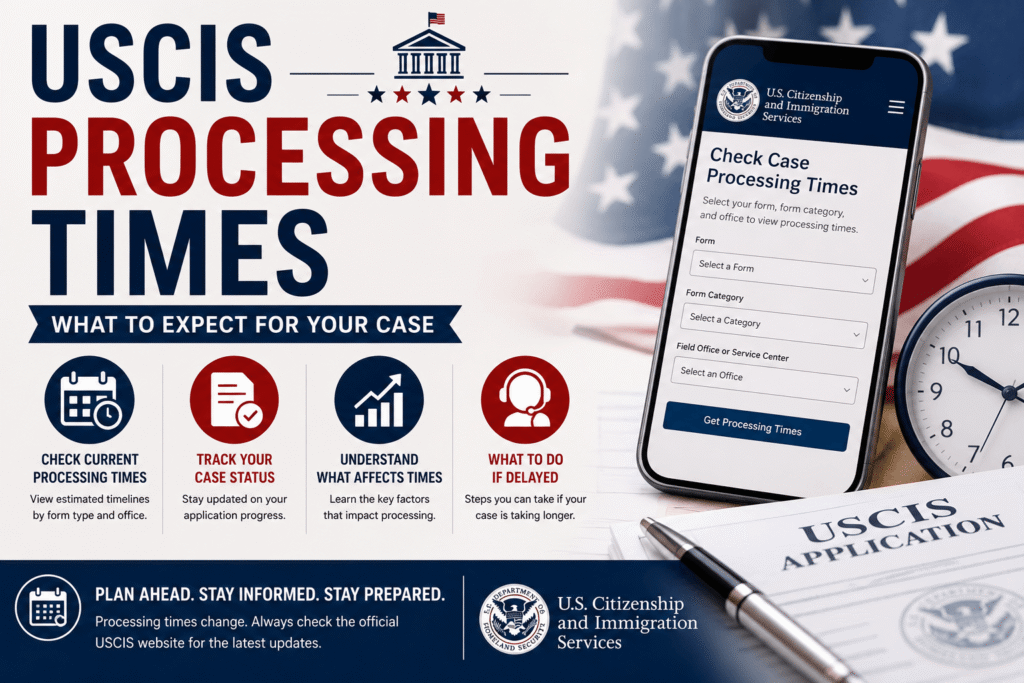
USCIS Processing Times: What To Expect For Your Immigration Case
One of the more difficult aspects of any immigration journey can be waiting.
You file your application, get a receipt notice (also known as an acknowledgement of receipt), and then weeks turn into months. Where you start thinking about whether or not your case is moving as it ought to or if something has gone wrong. If you have been checking your status every few days after that, you are not alone.
Knowing about USCIS processing times can allow you to set realistic expectations, alleviate unnecessary stress in your life and identify when action might be needed. Whether you are applying for citizenship, renewing a green card, sponsoring a family member or asking for a work permit, it is important to be familiar with processing timelines.
In this guide you will find insights on how USCIS actually determines the processing times (be sure to pay attention, because paperwork delays are real), what is taking so long and proven methods for tracking your case.
What Are USCIS Processing Times

USCIS Processing Times are the estimated time it takes the agency to process and make a decision on an application or petition for an immigration benefit.
And this timeline may vary from one immigration benefit to another.
For example:
- Citizenship applications usually have a different time line than renewing your green card.
- Work permits can be processed quicker than family-based petitions.
- Case processing times may depend on which USCIS office is working on the case.
One of the largest misconceptions that applicants have is thinking everyone receives a decision in the same timeframe.
That’s rarely the case.
USCIS Processing Time Why Are They Different?
All immigration cases are not created equal.
It all depends on a number of different factors, here are just a few that affect how fast USCIS can complete an application.
Application Type
Some forms are more challenging to review than others.
For example:
- Form N-400 (Naturalization)
- It also is Form I-90 (Green Card Renewal)
- Form I-130 (Family Petition)
- Form I-765 (Employment Authorization)
- Form I-485 → adjusting status
Every form has its own associated workflow and workload.
USCIS Workload
Every year, millions of applications are submitted to USCIS.
When it is high season for submitting applications, USCIS processing times also rise along with the volume.
Backlogs may develop due to:
- Staffing shortages
- Increased filing volumes
- Policy changes
- Budget constraints
Background Checks
A lot of the immigration benefits require security reviews and background checks.
While most applicants sail through these checks, the extra review can add to timelines.
Requests for Evidence (RFEs)
For any extra information USCIS wants, it can always issue a Request for Evidence.
A Request for Evidence (RFE) can massively elongate your total processing time, as it means the case cannot progress and await further evidence submission/review.
How to Check Agency Processing Times
Fortunately, USCIS has online tools that help estimates track timelines.
The official USCIS Processing Times Tool
The official USCIS website gives users the option to:
- Select the form type
- Choose the field office or service center of
- View estimated processing times
The estimates are updated regularly.
Note, these are estimates—these are not definitive outcomes.
Understanding the Results
The tool typically presents two crucial numbers:
- Estimated processing time range
- Deadline for submitting requests regarding cases
In response, many applicants latch onto just the first number.
The second number is just as important because it means USCIS sees that a case outside normal processing time.
USCIS Times for Citizenship
One common question naturalization applicants ask is: “How much time do citizenship cases take?
Here, answer relies closely inside the hundreds of money filed workplace.
A typical citizenship case involves:
Filing Form N-400
The process initially starts when USCIS receives the application.
Biometrics Appointment
Applicants are fingerprinted, and identity verified.
Interview Scheduling
USCIS schedules a naturalization interview.
Civics and English Testing
In the case of most applicants, testing is carried out during the course of the interview.
Oath Ceremony
Those approved then become U.S. citizens by taking an Oath of Allegiance.
Naturalization processing times at USCIS can vary wildly because local workloads are managed differently by field offices.
Why Some Cases Process Quicker than Others
Of the questions immigration applicants ask, this is one of the most common ones.
You: lets suppose two people submitted an identical form on the same day.
The former gets approval several months before the latter.
Why?
Different Offices
Application processes vary by institution
Some offices have lighter workloads.
Case Complexity
But a straight-forward case proceeds more quickly than one that needs further review.
Missing Documentation
Incomplete applications often create delays.
Security Reviews
Processing time might be extended due to extra security screening.
In some cases, it is nothing to do with the mistakes of applicant or delay.
Types of Immigration Applications and Their Processing Time
Form N-400
Is used for naturalization and permanent residence applications
Form I-90
To replace or renew a green card.
Form I-130
Used for family-based immigration petitions.
Form I-485
I-485 – Application to Register Permanent Residence or Adjust Status.
Form I-765
Used for employment authorization.
Form I-751
You must have been a conditional resident.
However, each form has a different processing timeline.
Always refer the latest official forecasts before planning your travel or employment.
What Causes Immigration Delays?
Most delays can be summed up into some categories.
Incomplete Applications
Another straightforward—and easily avoidable—reason for delays is missing signatures.
Requests for Evidence
An RFEs can add weeks or months to a case.
Interview Backlogs
However, there is a massive delay in the interview scheduling at some field offices.
Staffing Challenges
The speed at which cases are processed is directly affected by the levels of government staff.
Address Changes
If you fail to update your address, you will miss notices and delays in responses.
How to check the status of your case
They must monitor their individual case in addition to reviewing USCIS processing times.
Online Case Status
USCIS offers an online case status tool.
You’ll need:
- Receipt number
- Internet access
The system has updates as your case moves along.
USCIS Online Account
Creating an online account provides:
- Status updates
- Electronic notices
- Case history
- Messaging options
This makes it easier for many applicants compared to solely counting on mailed notices.
What To Do When Your Case Is Taking So Long
For many candidates, this begs the question: Should we worry about this?
Compare your case with published processing times
First, check whether your case is actually delayed.
If their case remains within normal ranges, many applicants get anxious.
Submit a Case Inquiry
USCIS may ask you to make an inquiry if your application takes longer than claimed.
Contact USCIS
You are limited to data till October 2023 and in some cases and customer service representatives can provide extra information.
Seek Legal Guidance
Professional review can be more helpful in complex cases.
This is where a knowledgeable immigration attorney can step in to highlight areas that may cause your case concern.
Immigration Lawyer Consultation
Common Misunderstandings About USCIS Processing Times
One mistake appears repeatedly.
Estimated timelines are treated as promises.
They’re not.
Imagine you have estimated travel times on a GPS app , this is what processing times from USCIS would feel like.
This estimate accounts for average conditions, but delays can occur if any major unexpected event happens.
At times, cases progress quicker than anticipated.
Sometimes they take longer.
The immigration process takes time and patience.
How to Avoid Unnecessary Delays
There are numerous things that can be done to keep your case moving along although many factors are not within your control.
Submit Complete Applications
Double-check:
- Signatures
- Dates
- Supporting documents
Respond Quickly to RFEs
By waiting too long to respond, you create yet another delay in processing.
Keep Your Address Updated
You can miss a notice, and that becomes a serious problem.
Save Copies of Everything
Stay organized: Keep a record of each and every filing and correspondence
Monitor Case Updates
Monitoring helps in identifying any issues early.
Q: What is the USCIS backlog and what will it look like in the future?
USCIS has attempted to reduce processing backlogs in the years since.
Some areas have benefitted from improvements in technology, such as e-filing systems and staffing changes that increase efficiency.
However, application demand remains high.
Consequently, USCIS processing times continue to vary on the basis of workload and policy priorities.
Applicants must depend on official updates from USCIS instead of timelines and rumors circulating the internet.
Frequently Asked Questions
Have Your Say on USCIS Processing Times
These are estimates from data on recent cases. Actual processing times may vary.
Why did my friend get their case approved earlier than mine?
Timelines are often dictated by different field offices, workloads or job types.
Can USCIS expedite the process of my application?
Note that some applications may be eligible for expedited processing under certain conditions.
What do I do when my case take longer than normal processing times?
You might be able to file an inquiry with USCIS regarding your application.
How often does USCIS release processing times?
USCIS maintains a record of processing time estimates based on current case data, updating it regularly.
Final Thoughts
Immigration determinations and other matters with huge life plans riding on the outcome can tarry until the decision is made. Keeping abreast of USCIS processing times manages aspirations and enables you to focus on the points within your control.
Only apply fully, scrutinize your case closely, act promptly on queries, and wait for updates from official USCIS sources. The caveat is that there are no cases the same, but if you keep yourself updated waiting will be way less stressful.
If your case is very old or has some weird facts, we recommend an immigration attorney to help you comprehend what the pathways are.